.jpg)


Professional Olive Oil Mills and Olive Oil Processing Plants
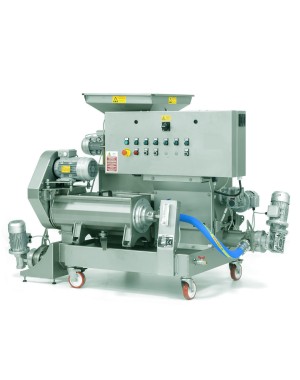
Professional Olive Oil Mills and Processing Plants from 30 to 200 kg/h
Professional olive oil mills are designed to transform freshly harvested olives into extra virgin olive oil through a production process that includes olive preparation, crushing, malaxation and oil separation. For farms, small producers and agricultural businesses wishing to process their own harvest, an olive oil processing plant with a capacity of 30 to 200 kg/h provides an opportunity to manage olive oil production independently and reduce the time between harvesting and extraction.
The quality of extra virgin olive oil depends on several factors, including olive variety, ripeness, fruit condition, harvesting methods, processing times and extraction conditions. A correctly sized professional olive oil extraction system allows producers to organize these operations efficiently, monitor the main processing stages and reduce conditions that could negatively affect the oil's aromatic and sensory characteristics.
Choosing the right olive oil mill requires evaluating the hourly processing capacity, ranging from 30 to 200 kg of olives for the equipment in this category, as well as construction quality, cleaning accessibility, extraction technology and the possibility of integrating additional equipment into the production line.
Every stage, from harvesting to extraction, contributes to the final result. Using professional inverted olive harvesting umbrellas can facilitate harvesting operations, while a properly sized olive oil mill enables the collected fruit to be processed promptly.
Professional Olive Oil Mills for Farms and Small Producers
Small-scale olive oil mills are particularly suitable for agricultural businesses, independent olive growers, artisan producers and farms wishing to transform their own olives into oil.
Having an olive oil processing plant on-site allows producers to schedule extraction according to harvesting activities without necessarily depending on the availability of external mills.
This can be particularly important during the busiest harvesting periods, when the time between picking and processing becomes an important factor in maintaining the condition of the raw material.
An on-farm olive oil mill also allows different olive batches to be processed separately, enabling producers to organize production by olive variety, harvesting date or specific product characteristics.
The appropriate system capacity should be selected according to the quantity of olives available, the duration of the harvesting season and the number of hours dedicated to processing each day.
Olive Oil Mills from 30 to 200 kg/h: Choosing the Right Capacity
The hourly capacity of an olive oil mill indicates the quantity of olives that the system can process under specified operating conditions. It should not be confused with the quantity of oil produced, which depends on the actual oil yield of the olives.
Olive oil processing systems with capacities ranging from 30 to 200 kg/h meet different production requirements, from processing small harvests to handling larger quantities of olives.
Small Olive Oil Mills from 30 to 50 kg/h
Olive oil mills with a capacity of 30 to 50 kg/h can be suitable for small producers, farms with limited olive harvests and businesses that need to process relatively small quantities of fruit.
This capacity range allows olive oil production to be organized in small batches while maintaining direct control over the processing operations.
The actual processing capacity must always be verified according to the selected machine and its operating conditions.
Olive Oil Processing Plants from 60 to 100 kg/h
Olive oil extraction systems from 60 to 100 kg/h offer an intermediate solution for farms looking to increase their olive processing capacity.
These plants can be suitable for producers harvesting olives over several days and requiring equipment capable of keeping pace with harvesting activities.
When selecting a system, it is important to consider the duration of the individual processing stages, particularly malaxation, which may affect the continuity of production.
Professional Olive Oil Mills from 120 to 200 kg/h
Olive oil mills from 120 to 200 kg/h are intended for producers requiring higher processing capacities and a more structured production workflow.
These systems can be used by agricultural businesses with larger olive harvests or small professional processing facilities, depending on the technical specifications of the selected model.
In addition to nominal processing capacity, operators should consider olive feeding, malaxation times, by-product management, cleaning requirements and the organization of the entire production line.
How Does a Professional Olive Oil Mill Work?
A professional extra virgin olive oil production plant includes several processing stages designed to transform harvested olives into oil.
The exact equipment configuration may vary depending on the model, production capacity and extraction technology used.
Olive Preparation, Leaf Removal and Washing
The first stage involves preparing harvested olives by removing leaves, small branches, soil and other unwanted materials.
These operations can be performed using professional olive leaf removers and washing machines, designed to prepare the raw material before crushing.
Removing unwanted materials helps prepare the olives correctly and reduces the introduction of foreign substances into the subsequent processing stages.
Olive Crushing
Olive crushing involves breaking down the tissues of the fruit to obtain a paste containing olive pulp, vegetation water, oil and fragments of the olive stone.
This operation prepares the raw material for the subsequent malaxation stage.
The characteristics of the crushing system and the operating conditions can influence the structure of the olive paste and certain properties of the extracted oil.
Olive Paste Malaxation
Olive paste malaxation is the processing stage during which the paste is gently mixed under controlled conditions to encourage small oil droplets to combine and prepare the product for separation.
Malaxation temperature and duration are important parameters in the management of the extraction process.
The most appropriate conditions depend on the olive variety, ripeness, paste characteristics and desired production objectives.
Proper management of these parameters helps producers seek a suitable balance between extraction yield and the qualitative characteristics of the oil.
Olive Oil Separation and Extraction
After malaxation, the olive paste undergoes a separation process to extract the oil from the other components.
The technology employed depends on the configuration of the olive oil mill and may include centrifugal separation systems or other extraction solutions specified by the manufacturer.
The quantity of oil obtained depends on the characteristics of the olives and the overall efficiency of the extraction process.
Cold Extraction Olive Oil Mills and Temperature Control
Producing extra virgin olive oil with well-defined aromatic characteristics requires particular attention to processing conditions, including olive paste temperature.
Olive oil mills with temperature control, when equipped with the relevant devices, allow operators to monitor or regulate this parameter during the appropriate production stages.
Temperature influences the physical and biochemical processes occurring during olive transformation and may affect both extraction yield and the characteristics of the final product.
The term cold extraction is subject to specific conditions established by applicable regulations and cannot automatically be applied to every olive oil mill.
To use this designation correctly, the extraction technology and operating conditions must comply with the relevant requirements.
Extra Virgin Olive Oil Quality and Fast Processing After Harvesting
High-quality olive oil begins with high-quality raw material. Healthy olives, harvested correctly and processed promptly, provide favourable conditions for producing high-quality extra virgin olive oil.
An on-farm olive oil mill allows producers to organize extraction close to the harvesting location, reducing waiting times and improving the management of different olive batches.
Rapid processing is important, but it must be combined with suitable temporary olive storage, clean equipment and appropriate processing conditions.
Extra virgin olive oil must also comply with the chemical and sensory requirements established by applicable regulations.
No extraction machine alone can guarantee that the final product will qualify as extra virgin olive oil. The result depends on the entire production process.
Compact Olive Oil Mills and Mini Processing Plants
Compact olive oil mills and small processing plants can be an attractive solution for farms and producers wishing to install extraction equipment in facilities with limited available space.
When choosing a compact system, it is important to evaluate the actual machine dimensions, the space required for feeding olives, maintenance access and the areas needed for handling raw materials and finished oil.
Operators should also verify the utilities required by the selected model, including electrical supply, water connections and any auxiliary systems.
A compact installation should still provide sufficient access for cleaning, inspection and routine maintenance.
Olive Oil Yield: How Much Oil Can Be Produced?
The oil yield of olives represents the relationship between the mass of oil obtained and the mass of olives processed.
This value varies according to olive variety, ripeness, growing conditions, harvesting season and the efficiency of the extraction process.
For example, assuming a hypothetical oil yield of 15% by mass, processing 100 kg of olives would produce approximately 15 kg of oil. This is an illustrative calculation rather than a guaranteed yield for the equipment in this category.
An olive oil mill with a nominal capacity of 100 kg/h therefore refers to the quantity of olives processed and does not mean that the machine produces 100 kg of oil per hour.
To estimate actual oil production, it is necessary to consider both the quantity of olives processed and the real oil yield of the harvest.
Advantages of Professional Olive Oil Processing Plants
- Processing close to harvesting: helps reduce the time between olive collection and extraction.
- Independent production management: greater control over processing schedules.
- Different production capacities: systems designed for 30 to 200 kg of olives per hour.
- Separate batch processing: possibility of organizing production by olive variety or harvesting date.
- Process management: control of the main production stages according to the equipment configuration.
- Added value for agricultural production: direct processing of olives harvested on the farm.
- Integration with other equipment: compatibility planning with olive preparation, oil transfer and bottling systems.
- Solutions for small producers: capacity selection according to actual production requirements.
- Harvest season organization: processing schedules adapted to the quantities of olives available.
- More direct production workflow: opportunity to manage the process from harvesting to finished oil.
How to Size an Olive Oil Mill According to Your Harvest
Correctly sizing a professional olive oil extraction plant requires knowing the total quantity of olives to be processed, the number of harvesting days and the available daily operating hours.
For an initial estimate, the quantity of olives to be processed each day can be divided by the number of hours available for production.
For example, if a producer needs to process 600 kg of olives in one day and has six effective working hours available, the theoretical average capacity required is 100 kg/h.
This calculation is only a starting point. Preparation, cleaning, feeding and possible limitations of individual processing stages must also be considered.
The nominal capacity of a machine does not necessarily correspond to the throughput that can be maintained continuously throughout the working day.
Olive Oil Filtration After Extraction
After extraction, olive oil may contain suspended solid particles and small droplets of water. Depending on production requirements, it may undergo filtration before storage or packaging.
Professional olive oil plate filters can be used for clarification and polishing operations, using filtration media selected according to the desired result.
Filtration should be managed according to the characteristics of the oil and the operating conditions specified for the filtration system.
Professional Pumps for Olive Oil Transfer
During olive oil production and packaging, it may be necessary to transfer the product between storage tanks, filters and other processing equipment.
Professional progressive cavity pumps for olive oil offer a solution for product transfer, provided that their technical specifications and compatibility with the processing system have been verified.
Pump selection should consider the required flow rate, operating pressure, oil characteristics and available connections.
From Olive Oil Extraction to Professional Bottling
Once extraction and any required filtration operations have been completed, olive oil can be stored in suitable tanks before packaging.
For filling bottles and other containers, professional weight filling machines for olive oil can be used to dose the product according to the configuration of the selected equipment.
Integrating the different machines allows producers to organize a production line covering olive preparation, extraction, optional filtration, oil transfer and packaging.
FAQ – Frequently Asked Questions About Olive Oil Mills
• Which olive oil mill should I choose for a small farm?
Choosing an olive oil mill for a small farm depends primarily on the quantity of olives harvested, the number of days available for processing and the daily operating hours. A producer handling limited quantities may consider a system with a capacity of 30 to 50 kg/h, while farms with larger harvests may require equipment ranging from 60 to 200 kg/h. It is important not to focus exclusively on the nominal capacity of the machine. The continuity of the production process, malaxation times, cleaning requirements and available installation space should also be considered. Having an olive oil mill on the farm allows producers to organize extraction close to harvesting activities and manage different olive batches independently. Before purchasing, it is advisable to verify the electrical requirements, machine dimensions, included equipment, available accessories and extraction technology. The most appropriate system is the one that matches actual production needs while remaining practical to operate, clean and maintain.
• How many kilograms of olives can a small olive oil mill process per hour?
A small olive oil mill can be designed for different processing capacities. The equipment in this category covers nominal capacities ranging from 30 to 200 kg of olives per hour, depending on the selected model and configuration. Hourly capacity refers to the quantity of olives that the plant can process under specified operating conditions, not the quantity of oil produced. For example, a 100 kg/h olive oil mill has a nominal processing capacity of 100 kg of olives per hour, but the actual amount of oil obtained depends on the oil yield of the harvested fruit. Effective production may also be influenced by olive feeding, malaxation times, cleaning operations and the characteristics of the raw material. When sizing a processing plant, it is therefore important to consider not only the stated throughput but also the performance of the complete production line and the number of effective operating hours available each day.
• How much olive oil can be obtained from 100 kg of olives?
The quantity of olive oil obtained from 100 kg of olives depends on the oil content of the fruit and the efficiency of the extraction process. Oil yield varies according to olive variety, ripeness, climate, agricultural practices and the condition of the olives at the time of processing. As an illustrative example, an oil yield of 15% by mass would correspond to approximately 15 kg of oil from 100 kg of olives. This figure is not a guaranteed yield and should not be treated as a precise production forecast. It is also important to distinguish between kilograms and litres of olive oil, since conversion depends on the density of the product. The hourly capacity of an olive oil mill generally refers to the quantity of olives processed rather than the amount of oil extracted. Estimating actual production therefore requires an assessment of the characteristics of the harvest and the extraction results achieved under real operating conditions.
• Why is it important to process olives quickly after harvesting?
Processing olives promptly after harvesting is important because the raw material may undergo undesirable changes during storage, particularly when the fruit is damaged, exposed to high temperatures or kept under unsuitable conditions. An on-farm olive oil processing plant allows producers to organize extraction close to the harvesting location, reducing waiting times and the need to rely on external processing facilities. This can help improve the management of the raw material and keep different olive batches separate. However, rapid processing is not the only factor determining olive oil quality. The condition of the olives, harvesting methods, equipment cleanliness, processing temperatures and storage conditions must also be considered. Producing high-quality extra virgin olive oil requires careful management of the entire process, from olive cultivation and harvesting to extraction and storage of the finished product. A properly selected olive oil mill supports this process but cannot independently guarantee the final quality classification.
• What is the difference between olive crushing, malaxation and oil extraction?
Olive crushing is the operation that breaks down the fruit tissues to produce a paste containing oil, vegetation water and solid components. Malaxation is the following stage, during which the olive paste is mixed to encourage small oil droplets to combine and prepare the material for separation. Malaxation time and temperature should be managed according to the characteristics of the olives and the desired production result. Oil extraction is the subsequent process in which the oil is separated from the other components of the paste using the technology installed in the processing plant. These three operations perform different but closely connected functions. Crushing characteristics can influence the structure of the paste, while malaxation and separation conditions affect the overall extraction process. When choosing an olive oil mill, producers should therefore evaluate the entire production line rather than focusing exclusively on the crushing machine. Proper coordination between the processing stages is essential for an efficient production workflow.
• Is a 100 kg/h olive oil mill sufficient for producing extra virgin olive oil on my farm?
An olive oil mill with a capacity of 100 kg/h may be suitable for a farm wishing to process its own harvest, but the decision depends on the quantity of olives available and the time dedicated to processing. For example, assuming a theoretical average capacity of 100 kg/h over six effective production hours, the calculated daily throughput would be 600 kg of olives. This estimate does not necessarily include interruptions, preparation, cleaning or possible limitations of individual processing stages. Actual production capacity must therefore be verified according to the selected model and plant configuration. Producers should also consider the number of harvesting days, the possibility of processing separate batches and the characteristics of the available facilities. Correct sizing helps identify an olive oil mill that matches the farm's production requirements and harvesting schedule without relying solely on nominal throughput figures. The most suitable solution should also provide practical access for operation, cleaning and maintenance.
>> Do you have specific requirements?
Contact us for a bespoke solution tailored to your production capacity, type of processing and output targets.

E-Mail: commercial@enologys.com