.jpg)


Craft Beer Production: Professional Brewing Systems

Craft Beer Production: Professional Brewing Systems
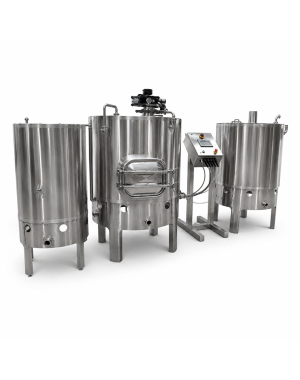
Enologys specializes in the design and manufacture of professional systems for craft beer production, developed for microbreweries, independent breweries, brewpubs, agricultural businesses, restaurants and companies looking for a controlled, efficient and repeatable brewing process. Our equipment covers the main stages of beer production, from wort preparation to fermentation, maturation and storage, with the possibility of completing the installation with professional draft beer dispensing systems.
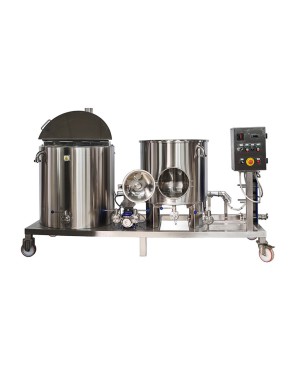
The range includes 5 production lines designed for different brewing capacities and business models, with systems ranging approximately from 200 to 2,500 litres. Each project can be configured according to batch size, daily and annual production targets, beer recipes, available space, automation level and future expansion requirements. For compact projects, Enologys also offers professional craft beer brewing systems suitable for new microbreweries and small-scale commercial production.
Professional brewing systems for craft beer production
A professional craft brewery system must allow the brewer to control the main stages involved in transforming malt into wort and then into finished beer. Depending on the configuration, the brewing process can include mashing, lautering, wort boiling, whirlpool separation, wort cooling, fermentation, maturation and storage.
The correct brewery size should not be determined only by the nominal batch volume. The number of daily brews, fermentation duration, number of beer styles produced simultaneously, fermenter availability and storage capacity all determine the actual output of a microbrewery. For this reason, the brewhouse and fermentation cellar should be designed as one integrated production system.
Brewing systems from 200 to 2,500 litres
The wide range of available capacities makes it possible to develop solutions for different production models, from compact brewpubs to professional breweries requiring continuous production. Smaller systems are ideal for launching a new brewing business with controlled output, while larger installations allow producers to increase hectolitres per year and improve production efficiency.
Different levels of automation can be incorporated according to the customer's requirements. Temperature management, process timing and product transfer can be monitored and controlled to improve recipe repeatability, process consistency and production organization from one batch to the next.
Professional fermenters for craft beer
Once the wort has been produced and cooled, fermentation becomes one of the most important stages of the brewing process. Enologys supplies professional beer fermenters in different capacities and configurations, including pressure-rated and isobaric fermenters for processes that require controlled pressure management.
The fermentation cellar must be correctly sized according to brewhouse capacity, weekly batch frequency, average fermentation time and the number of beer styles produced at the same time. An insufficient number of fermenters can quickly become the main production bottleneck, even when the brewhouse itself is capable of producing more wort.
Beer tanks for fermentation, maturation and storage
Professional beer production also requires appropriate vessels for the stages following primary fermentation. Enologys offers professional beer tanks designed for fermentation, conditioning, maturation, storage and product management before packaging or serving.
Tank volume, geometry, cooling system, operating pressure, fittings and accessories should be selected according to the brewing process and production layout. Designing the brewhouse and tank cellar together makes it easier to create an efficient workflow and prepare the brewery for future production growth.
Isobaric fermenters and beer fermentation under pressure
Isobaric fermenters for craft beer are designed to operate under controlled pressure within the limits defined by their construction and operating specifications. Depending on the brewing method, they can offer additional flexibility during fermentation, maturation and subsequent beer transfer operations.
The choice between a standard fermenter and a pressure-rated vessel therefore depends on more than tank capacity alone. Operating pressure, cooling configuration, valves, fittings, tank geometry and control accessories should all be evaluated according to the beer styles produced and the overall brewery process.
From brewing to professional draft beer dispensing
The production line can be completed with equipment dedicated to serving the finished beer. Enologys supplies professional draft beer dispensing systems suitable for microbreweries, brewpubs, taprooms, pubs, bars, restaurants and commercial venues.
Advanced home installations can also be configured for customers who want professional-style beer dispensing at home. This makes it possible to cover the entire beer production chain, from wort preparation and fermentation through storage and final draft service.
Advantages of Enologys craft beer equipment
- Professional systems for microbreweries and craft breweries.
- 5 production lines for different output requirements.
- Indicative capacities from 200 to 2,500 litres.
- Customisable brewery configurations.
- Systems for mashing, lautering, boiling and whirlpool.
- Professional and isobaric beer fermenters.
- Tanks for fermentation, maturation and storage.
- Different levels of automation.
- Solutions for microbreweries, brewpubs and taprooms.
- Expandable layouts for future production growth.
- Professional draft beer dispensing systems.
- Configurations based on available space and production targets.
How to choose the right craft beer brewing system
Choosing the correct craft beer brewing system starts with the desired batch size, but this is only one part of the calculation. Weekly and annual production, number of brewing days, fermentation times, number of recipes in production and the final packaging or serving method should also be evaluated.
Future growth should also be considered from the beginning. A properly sized brewhouse connected to an undersized fermentation cellar can severely limit overall production capacity. For this reason, Enologys develops complete layouts that consider brewing, fermentation, maturation, storage and final beer service as interconnected parts of the same production process.
Why choose Enologys for a craft brewery?
Enologys develops professional craft beer brewing equipment according to the real requirements of each project, including target capacity, beer styles, available space, workflow organization, automation level and future expansion plans.
From the brewhouse to fermenters, storage tanks and draft systems, the entire brewery can be designed as a coordinated and scalable production environment. This approach helps reduce bottlenecks between brewing, fermentation, maturation and storage while making the installation easier to expand as production and sales increase.
FAQ
What equipment is required to start a professional microbrewery?
Starting a professional microbrewery requires much more than choosing a brewhouse. A complete production system normally includes equipment for mashing, lautering, boiling, whirlpool separation and wort cooling, followed by correctly sized fermenters, conditioning or maturation tanks and storage vessels. Temperature control, pumps, transfer equipment and cleaning systems should also be considered. The downstream side of the business is equally important: a brewery selling packaged beer may require filling, kegging or bottling equipment, while a brewpub or taproom may focus primarily on professional draft beer dispensing. The ideal configuration therefore depends on target annual production, batch frequency, fermentation time, number of beer styles, available space and commercial model. Designing all these elements together helps avoid production bottlenecks and creates a more efficient and scalable brewery.
What brewing capacity should I choose for a craft brewery?
The correct capacity depends on the amount of beer you plan to produce and how frequently you intend to brew. Enologys offers professional systems ranging approximately from 200 to 2,500 litres, covering projects from compact microbreweries to larger craft brewing operations. However, the nominal brewhouse volume does not directly equal daily production capacity. A brewery may complete more than one batch per day depending on system design, workflow and staffing, while overall annual output can still be limited by available fermenter volume. For this reason, the best approach is to calculate expected annual hectolitres, number of brewing days, batches per week, average fermentation times and future growth targets. This allows the brewery to avoid both undersized systems that quickly become restrictive and oversized installations that increase investment without delivering a practical advantage.
How many fermenters does a craft brewery need?
The required number of beer fermenters depends on brewhouse capacity, brewing frequency and, above all, how long each vessel remains occupied. Fermentation can take several days or weeks depending on beer style, yeast, temperature and production method, and the same tank may also be used for conditioning or maturation. This means a highly productive brewhouse can quickly become limited if there are not enough fermentation vessels available. Breweries producing multiple beer styles at the same time also require additional tank flexibility. Proper sizing therefore considers litres per batch, number of batches per week, average fermentation and maturation time, beer rotation and planned production schedule. In many brewery expansions, increasing fermentation capacity is one of the most effective ways to increase total annual output without immediately replacing the brewhouse.
What is the difference between a standard fermenter and an isobaric fermenter?
An isobaric beer fermenter is designed to operate under controlled pressure within its certified construction and working limits. This can provide greater flexibility for specific fermentation, maturation, carbonation and transfer procedures. A standard atmospheric or low-pressure fermentation vessel may be perfectly suitable for many brewing processes, while an isobaric vessel can be selected when the brewery requires pressure management as part of its production method. The decision should therefore consider beer styles, process philosophy, packaging method and desired operational flexibility rather than capacity alone. Cooling jackets, maximum working pressure, tank geometry, valves, fittings, pressure controls and safety devices are all relevant design factors. For new breweries, selecting tanks with future production requirements in mind can reduce the need for major equipment changes as the business develops.
Can a complete system be designed from beer production to draft dispensing?
Yes. A complete craft beer production system can include the brewhouse, fermenters, maturation and storage tanks, temperature-control equipment and professional draft beer dispensing. This configuration is particularly suitable for brewpubs, taprooms, restaurants, farm breweries and businesses that produce and serve part or all of their beer directly to customers. Draft systems can be configured according to the number of beer lines, serving volume, distance between storage and dispensing points and type of commercial venue. Professional home draft systems can also be developed for private installations. Designing brewing and serving as parts of the same system makes it easier to coordinate production volumes, tank availability, beer transfer, storage and final service while maintaining a coherent workflow from raw materials to the consumer.
Can a craft brewery be expanded as production increases?
Yes. Scalability should ideally be considered from the first stage of the craft brewery design. Available floor space, pipework, utilities, refrigeration capacity and workflow can all be planned to allow future installation of additional fermenters, storage tanks or other production equipment. In many cases, total brewery output can be increased significantly by expanding fermentation capacity before replacing the original brewhouse. As production continues to grow, the brewhouse itself may eventually become the limiting factor and a larger system can then be considered. Planning for expansion from the beginning reduces costly modifications, simplifies installation of future equipment and allows investment to grow progressively in line with actual sales and production demand.
Discover all our solutions for beer production:
browse and download our catalog of brewery equipment, microbreweries and professional beer production systems , with configurations designed for different production capacities, from the brewhouse and fermentation to temperature control and process automation.
Do you have specific requirements for your brewery?
We design custom beer production systems and tailor-made microbreweries based on your production capacity, available space, and brewing process.
From the brewhouse and fermentation to temperature control and automation, we configure each brewery system around your actual production requirements and the types of beer you want to produce.
Contact us to design your custom brewery system.

Mail: commercial@enologys.com