.jpg)


Professional Craft Beer Brewing Systems Made in Italy

Professional Craft Beer Brewing Systems Made in Italy
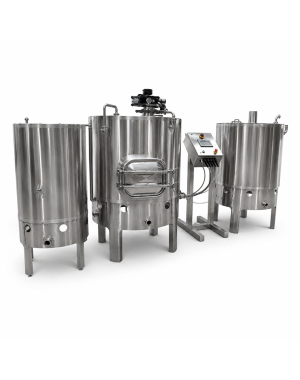
Enobeer specializes in the design and manufacture of professional craft beer brewing systems for microbreweries, brewpubs, independent breweries, farms and businesses planning to start or expand their own beer production. The project combines Italian manufacturing expertise with technicians specialized in the brewing industry, with the aim of developing modern, reliable and efficient systems configured around the real production requirements of each customer.
The range includes 5 lines of professional brewing systems, selected according to required production capacity, available space and desired level of automation. Professional systems cover capacities from approximately 200 to 2,500 litres per batch and can be integrated with beer fermenters, storage tanks, conditioning equipment and professional draft beer systems.
Microbrewery systems from 200 to 2,500 litres
Choosing the correct brewhouse requires more than simply deciding how many litres should be produced in a single batch. Daily and weekly brewing frequency, expected annual output, number of beer recipes, fermentation times, maturation requirements and available tank capacity all influence the correct sizing of a professional brewery.
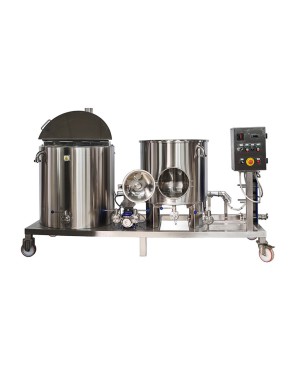
For compact production requirements, Enobeer offers professional craft beer brewing systems designed for microbreweries, brewpubs and new businesses that want to start production with professional equipment while maintaining a manageable initial capacity.
The range also includes different craft brewery system configurations, allowing the equipment to be adapted to production targets, available utilities, brewing methods and the operational requirements of each brewery.
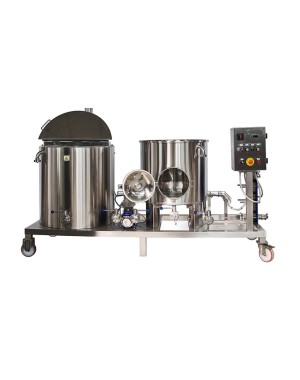
For breweries requiring higher output per brewing cycle, 500 litre craft beer brewing systems provide greater batch capacity and can help increase production while maintaining an efficient workflow between the different stages of the brewing process.
Professional brewhouses for craft beer production
The brewhouse is the heart of a craft brewery. Depending on the system configuration, the main production stages include mashing, lautering and separation of the spent grain, wort boiling, whirlpool, wort cooling and subsequent transfer to the fermentation area.
The number and configuration of brewing vessels can be selected according to production capacity, brewing method and required workflow. Different levels of automation and electronic process control can also be incorporated to simplify the management of temperatures, processing times and other important brewing parameters, helping the brewer achieve greater consistency between batches.
Professional beer fermenters
After the wort has been produced and cooled, one of the most important stages of beer production begins: fermentation. Enobeer supplies professional beer fermenters that can be integrated with brewhouses of different capacities and configured according to the brewery's production schedule.
Fermentation and storage vessels are available in capacities ranging approximately from 300 to 5,000 litres. Correct sizing of the fermentation area is essential because a fermenter remains occupied for considerably longer than the time required to complete a single brew. The number and capacity of fermenters should therefore be calculated according to brewing frequency, fermentation and maturation times and the number of different beers being produced simultaneously.
Beer tanks for maturation, conditioning and storage
A professional brewery does not end with the brewhouse. Sufficient tank capacity is required to manage fermentation, maturation, conditioning and storage efficiently. Enobeer's range of professional beer tanks allows the cellar area to be organized according to production volumes, beer styles and the brewery's operating methods.
Maintaining the correct relationship between brewhouse output and total available tank volume is fundamental for maximizing production efficiency. A high-performance brewhouse combined with insufficient fermentation or storage capacity can quickly create a bottleneck, limiting the actual number of batches that can be produced over a week, month or year.
From brewing to professional draft beer dispensing
For brewpubs, taprooms, bars, restaurants and breweries that serve their beer directly to customers, the production process can be designed to extend all the way to dispensing. Professional draft beer dispensing systems can complete the production chain by connecting brewing, fermentation, storage and final service.
This configuration is particularly suitable for brewpubs, where beer is produced and consumed within the same business. Brewhouse capacity, number of fermenters, storage tanks and draft beer equipment can be sized together according to expected consumption, beer rotation and the overall organization of the premises.
Turnkey craft brewery systems
On request, Enobeer can develop complete turnkey craft brewery and microbrewery systems. The project can be planned according to required production capacity, building characteristics, available floor space, utilities and the organization of the different production areas.
The analysis can include the brewhouse, fermentation area, maturation and conditioning tanks, beer storage and final product management. The objective is not simply to combine individual machines, but to develop a balanced brewing system in which every production stage is correctly sized in relation to the others.
Custom brewing systems for professional breweries
Every brewery has different requirements. A microbrewery focused primarily on keg or bottled beer distribution needs a different production layout from a brewpub that sells a significant proportion of its beer directly on site. For this reason, system design should start from the customer's actual production and commercial model.
Batch capacity, number of weekly brews, annual production targets, number of fermenters, average fermentation and maturation times, available space and future expansion plans should all be evaluated. This approach makes it possible to develop custom professional brewing systems while reducing the risk of oversizing the initial investment or creating insufficient capacity at a critical stage of the brewing process.
Microbrewery design and technical consultancy
Attention to customer requirements begins during the initial project analysis. When required, the characteristics of the premises can be evaluated to determine the most appropriate system capacity and an efficient layout for the main brewing equipment.
Correct organization of the available space helps optimize the workflow between wort production, fermentation, maturation, storage, packaging and dispensing. Future requirements should also be considered during the initial design phase, allowing sufficient space and infrastructure for additional tanks or increased brewing capacity as the business develops.
Made in Italy brewing technology and quality
Enobeer's philosophy is focused on developing Made in Italy craft beer brewing systems that combine technology, reliability, efficiency and customization. Cooperation between specialized production facilities and experienced brewing technicians allows professional solutions to be developed with particular attention to manufacturing quality and the real operational requirements of each brewery.
The principle behind the project is summarized by the motto “Quality, Professionalism, Assistance”: not simply supplying equipment, but supporting customers in selecting production capacity, configuring the brewery and developing a system suited to both current and future production objectives.
Advantages of Enobeer brewing systems
- Italian design and manufacturing.
- 5 lines of professional brewing systems.
- Production capacities from approximately 200 to 2,500 litres.
- Solutions for microbreweries, brewpubs and professional craft breweries.
- Fermentation and storage tanks from 300 to 5,000 litres.
- Different brewhouse configurations available.
- Automation and electronic process control options.
- System design according to available production space.
- Coordinated sizing of brewhouse and fermentation capacity.
- Integration with beer storage and draft dispensing systems.
- Complete turnkey brewery solutions available on request.
- Scalable design for future production expansion.
- Professional technical consultancy and assistance.
How to choose a craft beer brewing system
Brewhouse capacity is only one of the parameters required to size a professional microbrewery correctly. The starting point should be the amount of beer the brewery intends to produce annually, followed by an estimate of the number of batches required to achieve that target.
Production days, fermentation duration, maturation times, the number of beer recipes being processed simultaneously and total available tank capacity should then be considered. This analysis helps determine whether it is more efficient to perform a greater number of batches with a compact brewhouse or select a larger system capable of producing more beer per brewing cycle.
Why choose Enobeer?
Enobeer develops professional craft beer production systems starting from the customer's actual requirements. The objective is to create a balanced relationship between brewhouse capacity, fermentation, maturation, storage and final beer management rather than treating each machine or vessel as an independent component.
The experience of specialized technicians combined with Italian manufacturing makes it possible to develop projects of different sizes, from compact microbreweries to higher-capacity professional brewing plants, with the possibility of designing complete turnkey solutions tailored to the customer's production objectives.
FAQ
What brewing system capacity should I choose for a new microbrewery?
The correct capacity depends on expected annual production, the number of batches brewed each week and the brewery's commercial model. A system of approximately 200 litres can be suitable for a compact microbrewery, brewpub, farm brewery or new business starting with relatively small professional volumes. A 500 litre or larger brewhouse produces more beer per batch and can reduce the number of brewing cycles required to reach a specific production target. However, brewhouse capacity should never be considered alone. The number and capacity of fermenters, fermentation and maturation times, available floor space and future expansion plans directly affect the brewery's actual output. A correctly designed system therefore balances brewhouse capacity with fermentation and storage capacity.
What are the main stages of the craft beer brewing process?
Craft beer production involves several connected processing stages. In the brewhouse, the process generally includes mashing, lautering and separation of the spent grain, wort boiling and whirlpool. The wort is then cooled and transferred to a fermenter, where fermentation begins. Depending on the beer style and production method, maturation, conditioning and storage follow. The finished beer can then be packaged in bottles or kegs or transferred to a professional draft system for direct service. Because each stage affects the next, a professional brewery should be designed as an integrated process. Brewhouse output, cooling capacity, fermentation volume, tank availability and final packaging or dispensing requirements should therefore be evaluated together.
How many fermenters does a craft brewery need?
The number of fermenters depends on brewhouse capacity, weekly brewing frequency, fermentation duration and the number of different beers produced simultaneously. A brewing cycle can be completed in a matter of hours, while a fermenter may remain occupied for days or weeks. Fermentation capacity can therefore become one of the main factors limiting the annual output of a brewery. Correct sizing should calculate how much wort enters the fermentation area each week and how long each tank will remain occupied. Maturation, conditioning, cleaning between batches and recipes requiring different processing times should also be considered. For this reason, brewhouse capacity and fermenter capacity should ideally be planned together rather than selected as separate parts of the brewery.
Can Enobeer supply a complete turnkey microbrewery?
Yes. A turnkey microbrewery can be designed as a complete production system rather than as a collection of separately selected machines. The project can begin with an analysis of required output and available premises to determine the appropriate brewhouse, fermentation tanks, storage vessels and other equipment required by the production process. For brewpubs and businesses serving beer directly, draft beer dispensing can also be considered as part of the overall project. This approach makes it easier to organize production flows and ensure that the capacities of the different sections are correctly balanced. The brewery can also be planned with future expansion in mind, allowing additional tanks or increased production capacity to be introduced as sales grow.
Can a brewing system be expanded when production increases?
Yes. A well-designed brewery can be prepared from the beginning for future increases in production. In many cases, the first expansion consists of adding fermenters or storage tanks because the fermentation area can reach maximum capacity before the brewhouse itself becomes insufficient. As demand continues to increase, a larger brewhouse or additional production capacity may eventually be required. Planning sufficient floor space, utilities, cooling capacity, connections and production routes from the beginning makes future expansion easier. A scalable brewery allows investment to be distributed over time and enables production capacity to follow actual sales growth instead of requiring the company to install an unnecessarily large system during the initial startup phase.
What is the difference between a microbrewery and a brewpub?
Both microbreweries and brewpubs can use professional craft beer equipment, but their business models are generally different. A microbrewery may produce mainly for distribution in kegs, bottles or other packaging formats, while a brewpub usually produces a significant proportion of its beer for direct consumption on the premises. This difference affects brewery design. In a brewpub, the relationship between brewing capacity, consumption, tank volume and draft beer dispensing becomes particularly important. In a brewery focused on external distribution, storage, packaging and logistics may have greater importance. For this reason, professional brewery sizing should consider not only the number of litres produced but also how, where and at what rate the finished beer will be sold.
Do you have specific requirements for your brewery?
We design custom beer production systems and tailor-made microbreweries based on your production capacity, available space, and brewing process.
From the brewhouse and fermentation to temperature control and automation, we configure each brewery system around your actual production requirements and the types of beer you want to produce.
Contact us to design your custom brewery system.

Mail: commercial@enologys.com