.jpg)


Reverse Osmosis Concentrators for Must and Wine

Reverse Osmosis Concentrators for Must and Wine
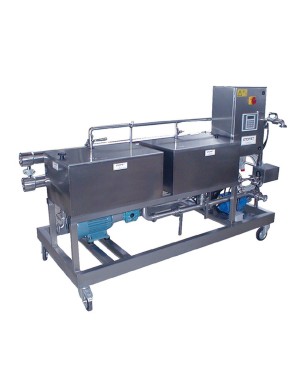
Reverse osmosis concentrators for must and wine are professional winery systems designed to selectively remove part of the water contained in grape must through semi-permeable membrane technology. This process increases the relative concentration of sugars, acids, extract and other naturally occurring compounds without relying on conventional high-temperature evaporation. Enologys supplies must concentration and wine processing systems that can be configured according to throughput, initial must characteristics, desired concentration level and the specific winemaking objectives of each winery.
Reverse osmosis is particularly useful when a winery needs precise and repeatable control over must concentration before fermentation or subsequent processing. By removing a controlled fraction of water, the process modifies the ratio between water and the compounds retained in the concentrate. The system can be integrated with wine and must temperature control systems, allowing wineries to manage concentration and thermal conditions as coordinated stages within a modern winemaking process.
How does reverse osmosis concentration of grape must work?
Reverse osmosis in winemaking uses pressure and selective semi-permeable membranes to separate part of the water from grape must. The product is circulated through membrane modules under controlled operating conditions. A portion passes through the membrane as permeate, while the retained fraction becomes progressively more concentrated. Pressure, membrane characteristics, flow rate and operating parameters are selected according to the product being processed and the required concentration objective.
Unlike conventional thermal concentration based on evaporation, reverse osmosis uses membrane separation and therefore limits the need for high-temperature treatment of the must. This makes it an important technology for wineries seeking controlled concentration while managing a heat-sensitive raw material. Product preparation is also important for membrane performance, and the concentration stage can be coordinated with professional wine and must filtration systems as part of an integrated processing line.
Must concentration, sugar concentration and extract management
Removing a controlled portion of water increases the relative concentration of compounds retained in the must. Depending on the characteristics of the raw material and the operating parameters, this can increase the relative concentration of naturally occurring sugars, acids, phenolic compounds, colour-related components and extract. Reverse osmosis does not add sugar or other ingredients: it changes concentration primarily by reducing part of the water contained in the original product.
The actual result depends on the composition of the incoming must, the percentage of water removed and the selected processing conditions. For this reason, professional must concentration should always be considered within the complete winemaking strategy rather than as an isolated operation. Before or after concentration, the production cycle may include must and wine clarification systems, fermentation, cooling, stabilization and other cellar operations.
Advantages of reverse osmosis must concentrators
- Controlled removal of water from grape must.
- Concentration through membrane separation technology.
- Reduced dependence on conventional high-temperature evaporation.
- Increase in the relative concentration of naturally occurring sugars.
- Management of must extract and other retained components.
- Adjustable processing according to winemaking objectives.
- Different processing capacities for small and large wineries.
- Integration with filtration, cooling and clarification systems.
- Repeatable and controllable concentration process.
- Custom configurations according to must characteristics and production requirements.
Applications of reverse osmosis in wineries
Professional reverse osmosis equipment can be incorporated into different winery layouts, from smaller wine estates to facilities processing significant quantities of grape must during harvest. The technology is particularly relevant when the winery requires controlled water removal and a repeatable method of modifying must concentration before subsequent winemaking stages.
Reverse osmosis should be considered as part of a broader cellar process. After fermentation and maturation, wineries may use wine tartaric stabilization systems to manage tartrate stability before bottling. Integrating these technologies allows the winery to manage different physical and chemical parameters throughout production rather than treating each operation as an independent stage.
Integration with modern winery processing systems
A modern winery may combine must concentration with filtration, clarification, temperature control, fermentation management and stabilization technologies. Correct integration improves product flow between processing stages and makes it possible to design a production system around actual volumes, harvest schedules and winemaking protocols.
In technologically advanced wineries, additional systems can also be incorporated for managing fermentation by-products. Fermentation CO2 recovery systems, for example, can form part of a more comprehensive approach to winery process management and resource optimization.
How to choose a reverse osmosis concentrator for a winery
Selecting the correct reverse osmosis system for grape must requires more than simply knowing the total number of litres produced during harvest. Important parameters include the volume to be processed each day, required hourly throughput, initial composition of the must, target concentration, processing time available and characteristics of the product entering the membranes.
The evaluation should also consider membrane surface area and configuration, operating pressure, product circulation, cleaning and sanitation procedures, available installation space and compatibility with existing tanks, pumps, filters and cooling systems. Correct sizing helps avoid both insufficient processing capacity during peak harvest periods and unnecessary oversizing, resulting in a system that is better matched to the winery's real production requirements.
Professional membrane systems for winery applications
The performance of a must concentrator depends on the entire system rather than on nominal capacity alone. Membrane characteristics, product condition, operating parameters and cleaning procedures all influence process efficiency. For this reason, each application should be evaluated according to the type of must being processed and the required production objective.
The winery can also combine membrane processing with technologies designed to protect wine during storage and processing. Nitrogen generators for wineries can provide an additional process solution where inert gas management is required during wine production, transfer or storage.
Why choose Enologys?
Enologys supplies professional reverse osmosis concentrators for must and wine designed around the actual processing requirements of wineries. Systems can be configured according to hourly capacity, characteristics of the incoming must, concentration objectives, automation requirements and integration with existing winery equipment.
The objective is not simply to supply a stand-alone machine, but to identify a technically appropriate configuration within the complete production process. This approach makes it possible to develop scalable solutions for wineries seeking greater control over must processing, membrane separation and the different stages that connect grape processing with fermentation, stabilization and final wine preparation.
FAQ
What is a reverse osmosis concentrator for grape must and how does it work?
A reverse osmosis concentrator for grape must is professional winery equipment that uses pressure and semi-permeable membranes to separate a controlled portion of water from the must. During processing, the product circulates through membrane modules under defined operating conditions. Part of the liquid passes through the membrane as permeate, while the retained fraction becomes progressively more concentrated. As water is removed, the relative concentration of sugars, extract and other retained compounds increases. Unlike conventional evaporation systems, reverse osmosis does not depend on boiling or intensive high-temperature evaporation to achieve concentration. The final result depends on the initial characteristics of the must, membrane configuration, operating pressure, flow conditions and quantity of water removed. For this reason, a professional system should be selected and configured according to the winery's required throughput and specific winemaking objective rather than capacity alone.
What are the advantages of reverse osmosis for must concentration?
One of the main advantages of reverse osmosis for must concentration is the ability to remove part of the water through membrane separation without relying on conventional high-temperature evaporation. This provides wineries with a controllable method for increasing the relative concentration of compounds already present in the grape must. The process can be adjusted according to the raw material, required throughput and target concentration, making it suitable for different production conditions and harvest characteristics. Reverse osmosis can also be incorporated into an integrated winery process together with filtration, clarification, cooling and fermentation management. From an operational perspective, correct system sizing provides a repeatable processing method and allows the winery to define treatment capacity according to actual production requirements. The suitability and permitted use of any concentration process should always be evaluated according to the wine category, production protocol and applicable winemaking regulations.
Does reverse osmosis increase the sugar concentration of grape must?
Yes, but it is important to understand that reverse osmosis does not add sugar to grape must. Instead, the system removes a controlled portion of the water, thereby increasing the relative concentration of sugars that are naturally present in the original must. Other components retained during membrane processing may also become relatively more concentrated. The degree of concentration depends on the initial composition of the must and the quantity of water removed during treatment. Consequently, there is no single concentration setting suitable for every grape variety, harvest or winery. The required treatment must be evaluated according to the characteristics of the incoming must and the desired winemaking result. This distinction is particularly important when comparing reverse osmosis concentration with processes based on the addition of external ingredients: membrane concentration modifies the water-to-solids relationship of the existing product rather than introducing additional sugar.
How do I choose the correct capacity for a reverse osmosis must concentrator?
Choosing the correct reverse osmosis concentrator capacity requires an evaluation of the entire winery workflow. Total annual production is only one parameter. The winery should consider how many litres of must must be processed per day, the required hourly flow rate, the available processing window during harvest, the initial and desired concentration and the characteristics of the must entering the system. Membrane surface area, operating conditions, cleaning cycles, product preparation and integration with pumps, tanks, filtration and cooling equipment should also be considered. A unit that is too small may become a production bottleneck during peak harvest periods, while an unnecessarily large system can increase investment and operating requirements without providing a real production advantage. Correct sizing therefore starts from actual processing volumes and objectives, allowing the system to be configured around the winery rather than forcing the winery to adapt its production workflow to the machine.
Can a reverse osmosis concentrator be integrated with other winery equipment?
Yes. Reverse osmosis systems for must and wine can be integrated into a complete winery processing line and coordinated with equipment used before and after concentration. Depending on the characteristics of the product, the must may undergo filtration or clarification before membrane processing. After concentration it can continue toward fermentation, temperature-controlled processing and other stages defined by the winery's production protocol. Pumps, tanks, valves and automation systems can also be incorporated to improve product transfer and reduce unnecessary manual handling. When designing an integrated system, it is therefore important to consider not only the nominal capacity of the reverse osmosis unit but also its position within the overall process. This approach makes it easier to create a coherent production flow and to prepare the installation for future expansion, additional tanks or increased processing capacity.
>> Do you have specific requirements?
Contact us for a bespoke solution tailored to your production capacity, type of processing and output targets.

Mail: commercial@enologys.com