.jpg)


Professional Olive Destoners and Pitting Machines

```html
Professional Olive Destoners and Pitting Machines
Professional olive destoners and pitting machines are designed to mechanically separate olive pits from the flesh, producing destoned olive paste for subsequent malaxing and olive oil extraction. These machines provide a specialized processing solution for olive oil mills, agricultural producers and industrial olive oil facilities seeking to incorporate pit removal into their production process.
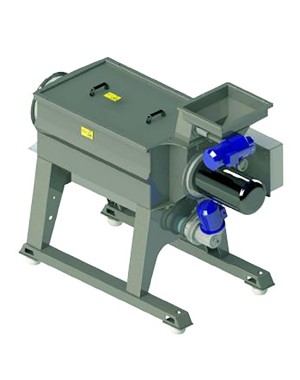
Olive pit separation machines use a mechanical system consisting of a loading hopper, motor-driven feeder, separation basket, three-blade centrifugal beater, separation screen and screw conveyor. The resulting pitted olive paste is transferred by a pump to the malaxers, where the next stage of olive oil processing takes place.
Enologys offers solutions for professional olive processing equipment, focusing on efficient integration into olive oil production lines, continuous product handling and the specific requirements of olive mills.
How Does a Professional Olive Destoner Work?
The operation of an industrial olive destoning machine is based on a coordinated sequence of feeding, mechanical pit separation and olive paste transfer.
Olives enter the loading hopper and are delivered to the separation basket by a feeder driven by a gear motor. Inside the basket, a three-blade centrifugal beater applies mechanical action to the fruit, separating the flesh from the olive stones.
The destoned olive paste passes through a separation screen, while the pits are discharged separately. A dedicated cleaning device keeps the screen openings clear during operation, helping maintain a regular and continuous separation process.
A screw conveyor then feeds the transfer pump, which moves the destoned paste to the malaxers for the next production stage.
This configuration allows olive pit removal and paste transfer to be organized as connected operations, reducing unnecessary manual handling between processing stages.
Mechanical Separation of Olive Pits and Pulp
Olive pit separation, also known as olive destoning or olive depitting, involves removing the hard internal stone from the fruit while retaining the flesh used for olive oil production.
Unlike conventional olive crushing, where the pit is generally broken together with the fruit, destoning separates the woody component before the subsequent malaxing and extraction stages.
This processing method can be selected according to olive variety, fruit characteristics, production objectives and the desired properties of the finished olive oil.
The choice between traditional crushing and destoning should consider the complete extraction process, including actual oil yield, olive paste behavior during malaxation and the sensory characteristics of the resulting oil.
Olive Destoners for Oil Mills and Extraction Plants
Olive destoners can be integrated into professional olive oil mills and extra virgin olive oil production lines, working alongside feeding systems, malaxers and paste transfer equipment.
Machine selection should consider the quantity of olives processed per hour, the layout of the facility and the capacity of the downstream equipment.
Within an olive oil production line, professional olive crushers provide conventional fruit crushing solutions, while olive destoners offer an alternative for processing methods that require pit separation before malaxation.
AISI 304 Stainless Steel Olive Destoning Machines
The olive pit separation machines described in this category feature product-contact components manufactured from AISI 304 stainless steel and materials certified for food contact.
Food-contact materials are particularly important in olive oil processing, where surfaces handling olives and olive paste must be suitable for hygienic production operations.
The mechanical construction includes dedicated components for feeding, separation and product transfer, creating a robust configuration for the operating conditions typically encountered during the olive harvesting and processing season.
Centrifugal Olive Destoning System
The separation mechanism uses a three-blade beater operating inside a separation basket. Mechanical action helps detach the olive flesh from the pit, while the perforated screen allows the destoned paste to pass through.
A dedicated screen-cleaning device helps prevent material from obstructing the separation openings. Maintaining the screen clear supports consistent operation and continuous paste discharge.
The integrated screw conveyor and pump also allow the destoning stage to connect directly with subsequent malaxation, helping maintain a regular processing flow.
Transferring Destoned Olive Paste to Malaxers
After pit separation, the olive paste must be transferred to the malaxers at a rate compatible with the production capacity of the olive mill.
The described destoner incorporates a screw conveyor that feeds the paste transfer pump. Pump selection should take into account product consistency, required flow rate, transfer distance and the configuration of the connected equipment.
For additional oil transfer operations, Enologys also offers professional progressive cavity pumps for olive oil, which should be selected according to the fluid being handled and the operating requirements of the application.
Advantages of Professional Olive Destoners
- Mechanical pit separation: produces destoned olive paste for further processing.
- Motorized feeding: loading hopper and gear motor control olive delivery.
- Centrifugal separation: three-blade beater helps separate olive flesh from pits.
- Screen-cleaning system: keeps the separation openings clear during operation.
- Integrated paste transfer: screw conveyor and pump deliver paste to the malaxers.
- Food-contact materials: AISI 304 stainless steel and certified food-contact components.
- Production line integration: suitable for incorporation into professional olive oil processing facilities.
- Processing flexibility: supports olive oil production methods based on destoned olive paste.
Olive Destoning and Extra Virgin Olive Oil Characteristics
Extra virgin olive oil produced from destoned olives represents an alternative to conventional processing methods in which olive stones remain present during crushing.
Removing the woody component changes the composition of the paste entering the malaxers. This can influence paste behavior during extraction and may affect certain chemical and sensory characteristics of the resulting olive oil.
The actual effects depend on olive cultivar, ripeness, fruit condition, processing parameters and extraction equipment. Destoning does not automatically guarantee superior oil quality or higher extraction yields.
For this reason, olive pit removal should be evaluated as part of an overall technical production strategy, taking into account the characteristics of the raw material and the desired finished product.
How to Choose a Professional Olive Destoner
Choosing an olive destoning machine for an oil mill begins with determining the required processing capacity and the type of olive oil production method.
The main selection criteria include:
- Quantity of olives to be processed per hour.
- Olive varieties and fruit characteristics.
- Configuration of the existing olive oil mill.
- Capacity of malaxers and downstream extraction equipment.
- Loading hopper and feeding arrangements.
- Destoned paste transfer system.
- Available installation space.
- Accessibility for cleaning and maintenance.
- Collection and handling of separated olive pits.
Correct sizing helps integrate the destoning stage without creating bottlenecks in subsequent olive oil processing operations.
From Olive Oil Production to Bottling and Labelling
Olive destoning is one specialized stage within the broader olive oil production process. Designing a professional facility requires consideration of the complete production cycle, from raw material preparation to extraction, storage and packaging.
After extraction, optional filtration and storage, the production process may continue with bottle filling and product preparation for distribution.
At this stage, professional olive oil labelling machines can be integrated into the packaging line to apply labels to bottles and other suitable containers.
For agricultural businesses involved in additional harvesting activities, Enologys also offers equipment such as inverted umbrellas for fruit harvesting, belonging to a separate category of agricultural harvesting equipment.
FAQ – Frequently Asked Questions About Olive Destoners
• What is a professional olive destoner used for?
A professional olive destoner is designed to separate the hard internal pit from the olive flesh, producing destoned olive paste for further processing and oil extraction. In mechanical machines equipped with a loading hopper, motor-driven feeder and centrifugal separation basket, olives enter a chamber where a rotating beater separates the flesh from the stone. The paste passes through a perforated screen, while the pits are discharged separately. A dedicated cleaning mechanism keeps the screen openings clear, and a screw conveyor feeds the pump that transfers the paste to the malaxers. This technology is used in olive oil production methods that require pit removal before malaxation. The machine should be selected according to the hourly processing capacity of the mill, olive characteristics and compatibility with downstream extraction equipment. Correct integration helps maintain a continuous flow between olive preparation, destoning, malaxing and oil extraction.
• What is the difference between an olive destoner and an olive crusher?
The main difference concerns how the olive pit is handled. A traditional olive crusher generally breaks the whole fruit, producing a paste that contains olive flesh and fragments of the stone. An olive destoner, by contrast, is specifically designed to separate the woody pit from the flesh, producing destoned olive paste. These two technologies therefore represent different methods of preparing olives for malaxation and extraction. The appropriate choice depends on the producer's objectives, the existing processing equipment and the characteristics desired in the finished oil. Destoning should not automatically be considered superior to conventional crushing, as both methods can be suitable for professional extra virgin olive oil production. Important factors include extraction yield, olive paste consistency, cultivar characteristics, malaxing conditions and the overall organization of the oil mill. Comparing results under actual production conditions can help determine which method best meets the producer's requirements.
• How are olive pits separated from the pulp?
Mechanical olive pit separation involves several coordinated operations. First, the olives enter a loading hopper and are transferred to the separation basket by a feeder driven by a gear motor. Inside the basket, a three-blade beater applies mechanical action that separates the olive flesh from the stone. The destoned paste passes through a perforated separation screen, while the pits are discharged through a separate outlet. A dedicated cleaning device keeps the screen openings clear during operation, helping maintain consistent paste passage. The resulting paste is then moved by a screw conveyor to the transfer pump, which delivers it to the malaxers. The actual separation efficiency depends on machine design, olive characteristics and operating conditions. Consequently, processing capacity and performance should be assessed using the technical specifications of the selected machine rather than assuming that every destoner delivers identical results. Correct machine adjustment, cleaning and maintenance are also important for reliable operation.
• Is extra virgin olive oil made from destoned olives better?
Extra virgin olive oil made from destoned olives may have different characteristics from oil produced using conventional whole-fruit crushing, but it cannot automatically be described as better. Removing the pit changes the composition of the olive paste and may influence extraction behavior, chemical composition and sensory properties. Scientific studies have investigated potential differences in phenolic compounds, aroma profiles and other quality parameters. However, the actual outcome depends on several factors, including olive variety, ripeness, fruit condition, processing time, malaxation settings and extraction technology. Oil yield may also vary depending on the specific production method. Destoning should therefore be viewed as a technical processing option rather than a guarantee of superior quality or greater productivity. Olive oil producers can evaluate its suitability by comparing extraction performance and the characteristics of the finished oil under representative operating conditions. The objective is to select the processing method that best matches the raw material and desired product profile.
• How do I size an olive destoner for a professional oil mill?
Sizing a professional olive destoning machine begins with the quantity of olives that must be processed each hour. The destoner's capacity should be compatible with upstream feeding equipment and downstream malaxers and extraction machinery, preventing pit separation from becoming a production bottleneck. Important information includes required hourly throughput, daily olive quantity, cultivar characteristics and the capacity of the malaxing section. The feeding system, available installation space, separated pit handling and paste transfer route should also be evaluated. When a destoner is added to an existing olive mill, compatibility with the installed machines and the overall processing layout is particularly important. The objective is to maintain a continuous and balanced production flow rather than simply selecting the largest available machine. A complete technical assessment helps avoid both undersized equipment that limits production and unnecessarily oversized machinery that exceeds the facility's actual processing requirements.
• What materials are used in professional olive destoning machines?
In the professional olive destoners described in this category, product-contact components are manufactured from AISI 304 stainless steel and materials certified for food contact. Selecting appropriate food-contact materials is important for hygienic processing and compatibility with olives and destoned olive paste. The machine incorporates several mechanical components, including the loading hopper, feeding unit, separation basket, rotating beater, perforated screen, cleaning device and screw conveyor. In addition to construction materials, buyers should consider accessibility to product-contact areas, the cleaning procedures specified by the manufacturer and routine maintenance requirements. These factors are particularly relevant during the olive harvesting season, when processing equipment may operate for extended periods. Proper cleaning, inspection and maintenance help preserve suitable operating conditions and support reliable integration into professional olive oil production facilities. Exact construction details and maintenance procedures should always be checked against the specifications of the selected model.
>> Do you have specific requirements?
Contact us for a bespoke solution tailored to your production capacity, type of processing and output targets.

Mail: commercial@enologys.com