.jpg)


Professional Olive Belt Elevators and Conveyors
Professional Olive Belt Elevators and Conveyors
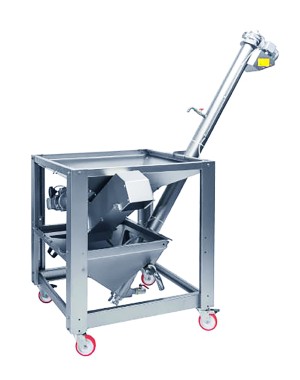
Professional olive belt elevators and conveyors are designed to provide continuous, controlled transportation of olives within olive oil mills and extra virgin olive oil production facilities. These machines transfer olives from the receiving area to branch removal, leaf separation and washing equipment, ensuring a regular supply of raw material to the subsequent processing stages.
Olive conveyor elevators feature a motor-driven conveyor belt with an adjustable-speed drive, allowing the belt speed to be adapted to the quantity of olives and the operating requirements of the production line. The loading hopper incorporates a vibrating feeding system with a dosing device, designed to distribute olives evenly across the conveyor belt, even when leaves and small twigs are present. This arrangement reduces the need for manual intervention to regulate the product flow.
Enologys offers equipment for professional olive processing, including conveyor systems designed for integration into olive oil production lines, improving the organization of olive feeding, transportation and raw material preparation.
Olive Belt Elevators for Professional Olive Oil Mills
The transportation of olives inside an olive oil mill is an important stage in maintaining continuity between reception, cleaning, washing and processing. Belt elevators move olives between different working levels and connect the machines that make up the production line.
Choosing the appropriate olive elevator requires consideration of the processing capacity, equipment layout, required discharge height and characteristics of the harvested olives. Properly organized transportation helps limit product accumulation and interruptions in the feeding of downstream machinery.
These systems can be incorporated into small agricultural olive mills, professional olive oil production facilities and continuous processing plants, provided that the selected elevator is appropriately sized for the actual production requirements.
Olive Belt Elevators with Integrated Leaf Suction System
Among the available configurations are olive belt elevators with an integrated suction system, designed to perform a leaf removal function while transporting the olives.
The suction unit helps separate leaves and other lightweight plant residues from the harvested olives, contributing to raw material preparation before subsequent cleaning and washing operations.
This configuration combines two operations within a single machine: the transportation of olives and the removal of lightweight plant material by air suction.
The effectiveness of leaf separation depends on the characteristics of the harvested olives, the quantity of leaves present and the operating conditions. Depending on the production requirements, an elevator with an integrated suction system can be used alongside dedicated olive cleaning equipment.
Adjustable Belt Speed with Mechanical Speed Variator
Olive belt elevators with adjustable speed are equipped with a mechanical speed variator that allows operators to adapt conveyor movement to the requirements of the processing line.
Adjusting the belt speed makes it possible to coordinate olive transportation with the capacity of downstream machinery, regulating the flow of raw material according to the production rate.
This feature is particularly useful during the olive harvesting season, when the quantity of incoming olives may vary depending on harvesting activities, deliveries from growers and the operating schedule of the olive mill.
The belt speed should be adjusted according to the distribution of olives, hopper capacity and operating conditions of the connected equipment.
Vibrating Olive Feeding Hopper with Dosing System
One of the main features of these professional elevators is the vibrating loading hopper with an integrated dosing device, designed to distribute olives evenly onto the conveyor belt.
The vibrating mechanism encourages the movement of olives from the hopper towards the conveyor, while the dosing system helps control the quantity of product being transferred.
This configuration is especially useful when freshly harvested olives contain leaves and small twigs, which can make product feeding less uniform.
The objective is to maintain a regular flow of olives without requiring repeated manual intervention to distribute the product or adjust the feeding rate.
AISI 304 Stainless Steel Olive Belt Elevators
In the olive elevators described in this category, all components in contact with the olives are manufactured from AISI 304 stainless steel, a material widely used in professional food processing equipment.
Using stainless steel for product-contact surfaces is important for meeting the hygiene requirements of olive processing and allowing suitable cleaning procedures.
The machine incorporates the conveyor system, loading hopper, vibrating feeding mechanism, dosing device and drive components. Certain configurations also include an integrated leaf suction system.
When selecting an olive elevator, the construction characteristics should be evaluated together with the operating conditions and the available installation space.
Integration into Olive Oil Production Lines
Olive belt elevators are used to connect the different stages of raw material preparation, from the receiving area to the equipment responsible for cleaning and washing the olives.
After these operations, the olives can be transferred to professional olive crushers and crushing equipment, where the fruit is processed into olive paste for the subsequent oil extraction stages.
The elevator capacity should be compatible with the processing capacity of the connected machines, preventing transportation from becoming a bottleneck within the production line.
For this reason, production line design should consider the required feeding rate, conveyor speed, discharge height, equipment positioning and overall organization of the olive oil mill.
Olive Transportation and Feeding Before Washing
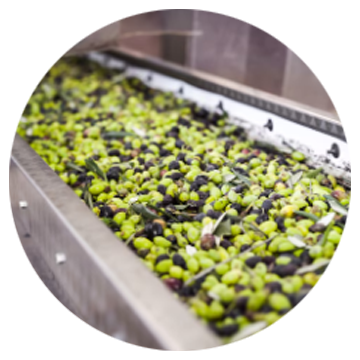
Freshly harvested olives may contain leaves, small branches, dust and other materials collected in the field. Before crushing, the raw material must therefore pass through appropriately organized preparation and cleaning operations.
Olive elevators with vibrating feeding hoppers provide controlled feeding of downstream equipment, distributing olives across the conveyor belt even when lightweight plant residues are present.
In versions equipped with an integrated suction system, some of the lightweight material can be separated during transportation. The olives can then proceed to additional branch removal and washing operations, according to the configuration of the processing plant.
Correct integration of the various machines helps establish a continuous processing sequence between reception, transportation, leaf removal, washing and crushing.
Advantages of Professional Olive Belt Elevators
- Continuous olive transportation: transfers olives between different sections of the olive oil mill.
- Adjustable conveyor speed: mechanical speed variator for adapting belt movement to production requirements.
- Vibrating loading hopper: promotes regular feeding of olives onto the conveyor.
- Integrated dosing device: helps control product distribution and feeding rate.
- Handling of leaves and small twigs: feeding system designed to operate even when lightweight plant residues are present.
- Optional leaf suction system: combines olive transportation with an initial leaf removal operation.
- AISI 304 stainless steel: product-contact components manufactured from material suitable for food processing.
- Reduced manual intervention: limits the need for repeated adjustments to the olive feeding flow.
- Production line integration: connects with branch removal, leaf separation and washing equipment.
- Operational flexibility: suitable for different olive mill layouts and processing requirements.
How to Choose a Professional Olive Belt Elevator
Choosing a professional olive conveyor elevator begins with determining the quantity of olives that must be transported each hour and the characteristics of the processing line.
Important information includes the required production capacity, the position of the loading hopper, the necessary discharge height and the distance between the machines being connected.
The presence of leaves and small twigs should also be considered, together with the possible need for an integrated leaf suction system and the benefits of adjustable conveyor speed.
A vibrating hopper with a dosing device is particularly useful when regular feeding is required and the objective is to reduce manual adjustments during operation.
Correct equipment sizing helps ensure that the elevator operates consistently with the capacity of downstream machines and the overall organization of the olive oil production facility.
From Olive Transportation to Oil Production and Packaging
Olive belt elevators are one component of a complete olive processing line. Professional olive oil production also requires equipment for extraction, transfer, treatment, storage and packaging.
After extraction, the oil may undergo further treatment using professional olive oil filtering equipment, selected according to production capacity and the requirements of the olive oil facility.
For transferring olive oil between processing equipment and storage tanks, professional progressive cavity pumps for olive oil can be selected according to the characteristics of the liquid and the operating conditions.
During the final packaging stage, professional olive oil bottle labelling machines can be incorporated into the production line to prepare bottles and suitable containers for commercial distribution.
FAQ – Frequently Asked Questions About Olive Belt Elevators
• What is a professional olive belt elevator used for?
A professional olive belt elevator is designed to transport olives between different sections of an olive oil mill, connecting the receiving area with machinery used for raw material preparation. It is primarily employed to feed branch removal systems, leaf separators and olive washing machines, transferring olives between different working heights. Transportation takes place on a motor-driven conveyor belt. In machines equipped with a mechanical speed variator, the belt speed can be adjusted according to the production requirements. A vibrating hopper with an integrated dosing device helps distribute olives evenly across the belt, even when leaves and small twigs are present. This arrangement supports more continuous feeding and reduces the need for manual intervention to regulate the product flow. The elevator should be selected according to the required hourly throughput, discharge height, available installation space and capacity of the connected machinery. Proper sizing helps maintain an organized production process and avoid unnecessary interruptions between processing stages.
• What is the difference between a standard olive belt elevator and one with an integrated leaf suction system?
The main difference is the presence of an integrated leaf suction system. A standard olive belt elevator primarily transports olives from the loading hopper to downstream processing equipment. A model equipped with a suction unit combines transportation with an initial leaf removal operation, helping separate leaves and other lightweight plant residues from the olives. This configuration can be useful when the raw material contains significant quantities of leaves following harvesting. However, the effectiveness of the suction system depends on the characteristics of the olives, the quantity of plant material and the operating conditions. An integrated suction unit does not necessarily eliminate the need for additional cleaning or washing equipment, which should be assessed according to the production process. Choosing between the two configurations depends on the organization of the olive oil mill, the condition of the incoming raw material and the cleaning operations already included in the production line. Both versions are intended to support controlled olive transportation.
• Why is adjustable belt speed important in an olive conveyor elevator?
Adjustable conveyor belt speed allows the movement of olives to be adapted to the processing capacity of downstream machinery. During the olive harvesting season, incoming quantities may vary considerably, making it useful to regulate the transportation rate according to actual production requirements. A mechanical speed variator enables the operator to adjust belt movement in coordination with the vibrating hopper, dosing device and connected equipment. If the conveyor operates too quickly for the machine receiving the olives, product accumulation may occur. Conversely, an excessively slow feeding rate may unnecessarily limit the productivity of the line. The appropriate speed should therefore be determined by considering the required throughput, the distribution of olives on the belt and the operating conditions of the processing plant. Adjustable speed provides operational flexibility and helps maintain a balanced flow of raw material between the different processing stages. The actual operating range depends on the technical characteristics of the selected elevator.
• How does a vibrating olive feeding hopper with a dosing system work?
A vibrating olive feeding hopper with an integrated dosing device receives the harvested olives and distributes them onto the conveyor belt in a controlled manner. The vibrating mechanism encourages the movement of the product towards the feeding area, while the dosing device helps regulate the quantity of olives being transferred. This arrangement is especially useful when olives arrive from the field accompanied by leaves and small twigs, which may interfere with uniform feeding in conventional hopper configurations. The purpose is to maintain a regular product flow without requiring operators to repeatedly redistribute olives by hand. The vibrating hopper should operate in coordination with the conveyor speed and the capacity of downstream machinery. Appropriate adjustment helps maintain process continuity and limit product accumulation at the feeding point. Actual performance depends on the design of the machine, the characteristics of the harvested olives and the operating conditions. Routine inspection and cleaning are also important for maintaining reliable feeding during the processing season.
• How do I choose and size an olive belt elevator for a professional olive oil mill?
Choosing a professional olive belt elevator begins with identifying the quantity of olives that must be transported per hour. The conveyor capacity should be compatible with the performance of the connected leaf separators, washing machines and other processing equipment. Important factors include the required discharge height, loading hopper position, available installation space and overall layout of the production line. The presence of leaves and small twigs should also be evaluated, as it may make a vibrating feeding hopper with a dosing system particularly useful. If initial leaf separation is required during transportation, a version equipped with an integrated suction system may be considered. Adjustable conveyor speed is another important feature because it allows the feeding rate to be adapted to changing production conditions. When installing an elevator in an existing olive mill, compatibility with the installed machinery and available connections must be verified. Correct sizing helps prevent olive transportation from becoming a limiting factor in the overall production process.
• What materials are used in professional olive belt elevators?
In the professional olive belt elevators described in this category, all components in contact with the olives are manufactured from AISI 304 stainless steel. This material is widely used in food processing equipment because of its corrosion resistance and suitability for appropriate cleaning procedures. The elevator includes several functional elements, such as the loading hopper, vibrating feeding system, dosing device, conveyor belt and drive components. Certain configurations also incorporate an integrated suction unit for leaf removal. In addition to the construction materials, buyers should evaluate accessibility to product-contact surfaces, the cleaning procedures specified by the manufacturer and the maintenance requirements of the machine. These considerations are particularly important during the olive harvesting season, when equipment may operate for extended periods. Proper cleaning, inspection and routine maintenance help maintain suitable operating conditions and support reliable integration into professional olive oil production facilities. The exact construction details and maintenance procedures should always be checked against the specifications of the selected model.